Seeing BLS, ACLS, and PALS on a healthcare training list can make course selection seem more complicated than it is. For most people in Folsom, CA, the answer comes down to three things: the credential your employer or school requests, the patients you work with, and your responsibilities during a medical emergency.
BLS provides the core resuscitation skills used by healthcare professionals. ACLS builds on that foundation for advanced adult cardiovascular emergencies, while PALS applies advanced assessment and resuscitation skills to emergencies involving infants and children.
The safest approach is not to choose the most advanced-looking course. Match the certification to the requirement you were actually given.
Key Takeaway: If your paperwork specifies BLS, ACLS, or PALS, follow that wording. BLS is foundational healthcare resuscitation training, ACLS focuses on advanced adult cardiovascular care, and PALS is designed for professionals responding to pediatric emergencies.
Three Questions Can Narrow Down Your Course Choice
Before comparing class locations or training formats, answer these three questions:
- What certification is written on your employer or school requirement?
- Do you primarily work with adults, children, or both?
- Are you expected to provide core CPR skills or participate in advanced resuscitation care?
These questions matter because BLS, ACLS, and PALS are not simply beginner, intermediate, and advanced levels of the same course. Each course has a distinct clinical purpose.
A medical assistant completing a healthcare program may be asked for BLS. A nurse transferring to an adult critical-care setting may need ACLS in addition to foundational skills. A clinician working with seriously ill pediatric patients may be required to maintain PALS.
Those examples illustrate how course selection works, but individual requirements vary. Always use your employer, school, licensing organization, or clinical program as the final authority.
BLS Covers the Skills Many Healthcare Roles Build From
For many Folsom healthcare workers and students, a BLS CPR Certification Course is the logical starting point because BLS is designed specifically for healthcare professionals, trained first responders, and people enrolled in healthcare training programs.
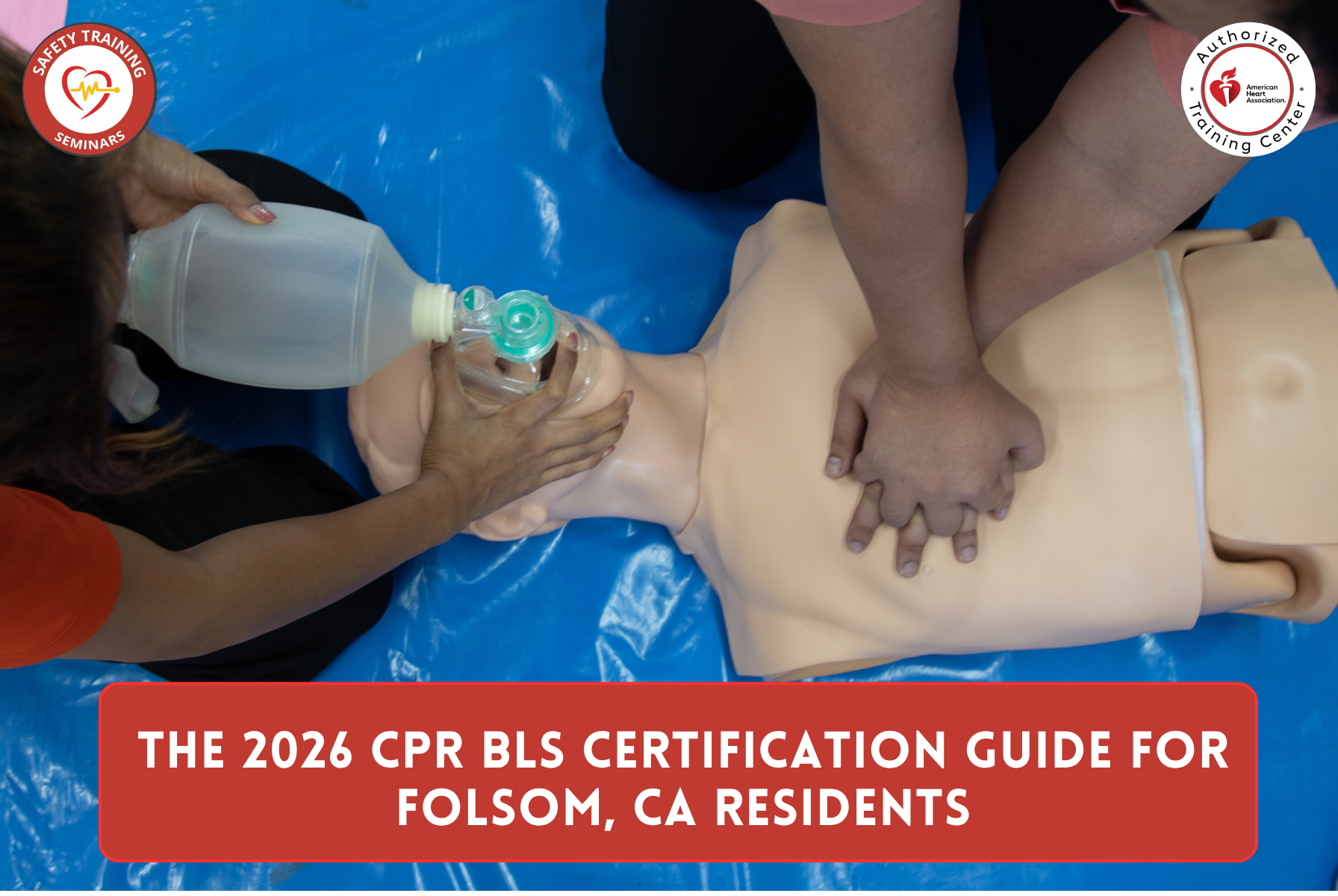
American Heart Association BLS training covers recognition of life-threatening emergencies, high-quality CPR, appropriate ventilation, and early AED use. These skills apply in both healthcare facilities and prehospital environments.
That distinction is useful for someone whose requirement simply says “CPR.” General CPR education and healthcare-provider BLS are not necessarily interchangeable. Check whether your employer or school specifically requests BLS rather than assuming any CPR course will satisfy the requirement.
Learners who have already confirmed that BLS, ACLS, or PALS is required can review Folsom CPR and healthcare certification classes before selecting their course.
ACLS Is a Separate Step Into Advanced Adult Care
ACLS becomes relevant when a healthcare professional’s role involves managing or participating in advanced care for adult cardiovascular emergencies.
The American Heart Association describes ACLS as building on the foundation of BLS and focusing on recognition and intervention for adult cardiac arrest, stroke, and other cardiopulmonary emergencies. It is intended for professionals who direct or participate in managing those types of events, including personnel in emergency medicine, intensive care, critical care, and emergency response.
One misunderstanding is worth clearing up: ACLS does not simply contain BLS certification inside it. The AHA states that BLS is not included in its ACLS courses, although ACLS participants are expected to be proficient in BLS skills.
That matters if a new job asks you for both credentials. Completing ACLS should not automatically be treated as satisfying a separately listed BLS requirement.
Healthcare professionals who work or live northwest of Folsom can also compare Carmichael CPR, BLS, ACLS, and PALS classes when considering where to complete required training.
PALS Changes the Focus From Adult to Pediatric Emergencies
PALS is not simply ACLS for a different age group with all the same decisions and procedures. Pediatric patients require a course designed around the recognition and management of emergencies involving infants and children.
According to the American Heart Association, PALS is intended for healthcare professionals who respond to pediatric emergencies and for personnel in settings such as emergency response, emergency medicine, intensive care, and critical care where pediatric patients are encountered regularly.
The curriculum addresses areas including respiratory emergencies, shock, arrhythmias, and cardiopulmonary arrest while emphasizing coordinated team response.
This makes PALS particularly relevant when pediatric emergency care forms part of a person’s clinical responsibility. However, simply working around children does not automatically mean that PALS is the required credential. Teachers, childcare providers, coaches, and other nonclinical professionals may have different CPR or First Aid requirements.
Confirm the exact course with the organization requesting your training rather than selecting PALS based only on your workplace population.
One Person May Need More Than One Certification
A common mistake is treating BLS, ACLS, and PALS as three competing options when, for some healthcare roles, they are separate credentials that work together.
Consider the difference:
- A healthcare student may require BLS for clinical placement.
- A clinician involved in advanced adult emergency care may require BLS and ACLS.
- A healthcare professional treating both adult and pediatric emergency patients may be asked for BLS, ACLS, and PALS.
- A person outside clinical healthcare may need a different CPR or First Aid course instead.
The correct combination depends on the role, workplace, and program requirements. Taking additional courses does not automatically eliminate the need to maintain a specifically requested credential.
This is especially important during job changes. Training requirements for one department or clinical setting may not be identical to those for another.
Course Format Is Part of the Decision Too
After identifying the right certification, check how the course is delivered.
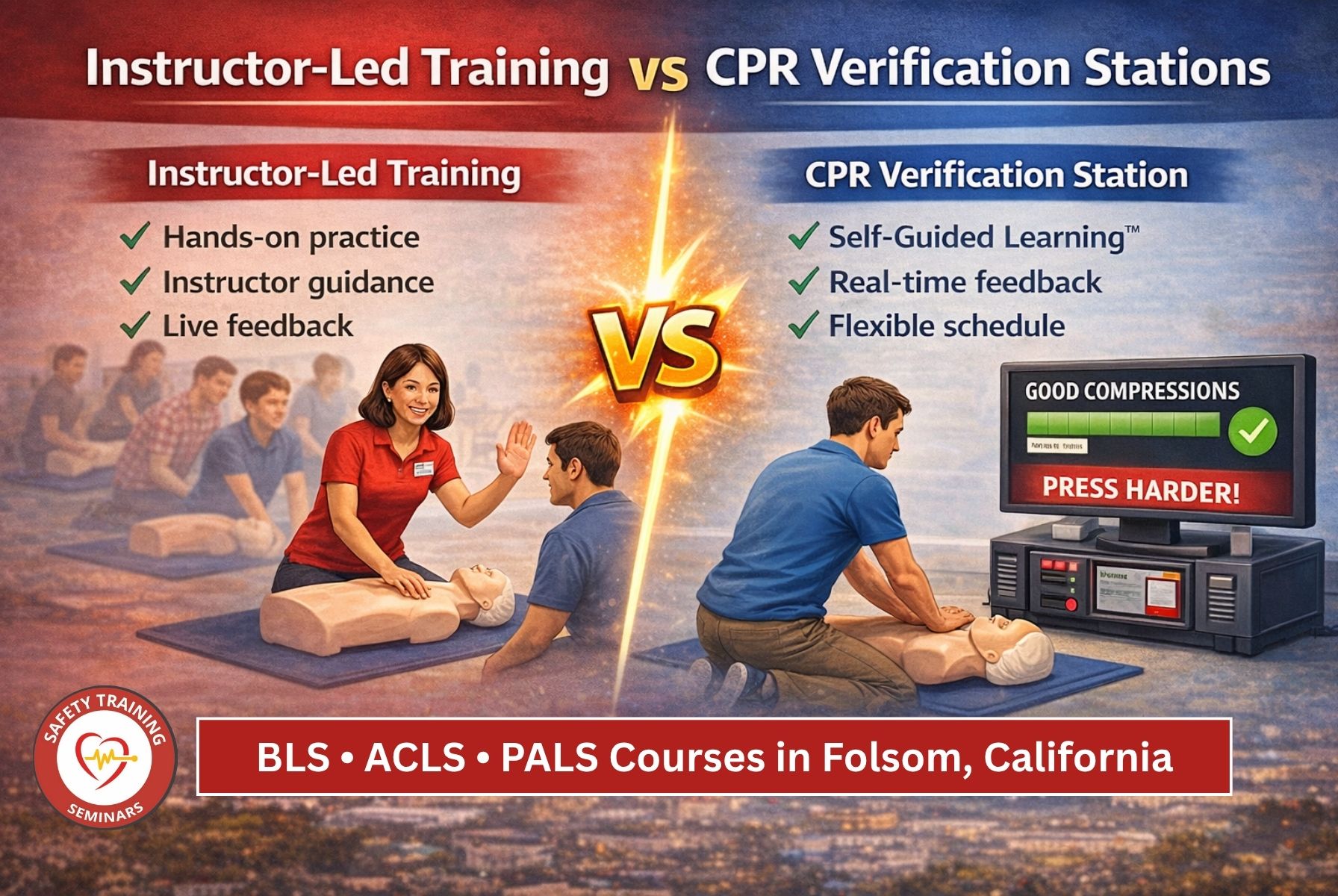
For BLS, the American Heart Association currently offers classroom training as well as HeartCode BLS blended learning, which combines online coursework with a hands-on skills session. ACLS is also available through classroom and blended-learning options, and PALS has classroom and blended-learning pathways.
Before registering, verify:
- whether you need an initial or renewal course;
- whether your organization specifies a particular course format;
- whether pre-course preparation applies;
- what identification or documentation you should bring;
- whether hands-on skills completion is part of the selected option.
Do not rely on a previous employer’s policy when starting a new job or program. Acceptance requirements can differ between organizations.
Planning Training From Folsom and Nearby Sacramento-Area Communities
For someone balancing hospital shifts, clinical placements, school, or work obligations, location can become an important practical factor after the correct certification has been identified.
Folsom learners may also travel between Sacramento, Carmichael, Citrus Heights, or Elk Grove for work or school. Rather than choosing whichever training center appears closest on a map, first confirm the course you need and then compare relevant locations.
For example, someone whose regular travel takes them toward northern Sacramento County can review CPR and advanced life support courses in Citrus Heights. Someone commuting toward the Sacramento area can instead compare Sacramento CPR, BLS, ACLS, and PALS training options.
This keeps course requirements at the center of the decision while still allowing you to choose a location that fits your routine.
Reviewing Safety Training Seminars Courses in Folsom
Safety Training Seminars lists BLS, ACLS, PALS, CPR, First Aid, and other healthcare training options at its Folsom location. The training center address is 13405 Folsom Blvd, Suite 507B, Folsom, CA 95630.
If your employer, school, or clinical program has already specified a BLS, ACLS, or PALS requirement, use that information when reviewing the Folsom course page. Compare the course name and current registration information rather than enrolling based only on a general request to “get CPR certified.”
People traveling from Carmichael, Citrus Heights, Sacramento, or other nearby communities can also compare the supplied location pages according to their normal work or school travel.
The practical goal is simple: confirm the required certification first, then select the appropriate course and location.
Frequently Asked Questions
Does a Folsom healthcare worker need BLS before taking ACLS?
ACLS builds on BLS skills, and the AHA states that participants are expected to be proficient in BLS when taking ACLS. BLS itself is not included in the ACLS course. If your employer lists both certifications, confirm whether you must maintain separate current credentials rather than assuming ACLS replaces BLS.
Is PALS necessary for every healthcare professional who works with children?
No. PALS is intended for healthcare professionals who respond to emergencies involving infants and children, particularly in clinical settings that encounter pediatric emergencies regularly. Your employer or clinical program should determine whether PALS is required for your specific role.
Is BLS different from regular CPR training?
Yes. AHA BLS is designed for healthcare professionals, first responders, and healthcare students and includes healthcare-focused CPR, ventilation, AED, and team-response skills. If your paperwork specifies BLS, verify that the course you choose matches that requirement rather than registering for a general CPR course.
Can I complete part of BLS, ACLS, or PALS online?
The AHA offers blended-learning options for BLS, ACLS, and PALS that combine online learning with hands-on training components. Before enrolling, confirm whether the format matches the requirement from your employer, school, or licensing organization.
Should I take my course in Folsom if I live in Citrus Heights or Sacramento?
You can compare locations according to your work, school, and travel needs. The more important consideration is whether the location offers the specific certification you have been asked to complete. Review current course information for Folsom and nearby supplied locations before registering.
Make the Certification Requirement Your Starting Point
BLS, ACLS, and PALS serve different clinical purposes, so the right choice begins with your professional responsibilities rather than the course that sounds most advanced. BLS develops foundational healthcare resuscitation skills, ACLS builds on that foundation for advanced adult cardiovascular emergencies, and PALS addresses advanced pediatric emergency care.
For healthcare professionals and students in Folsom, CA, check the exact wording supplied by your employer, school, licensing organization, or clinical program before enrolling. If more than one credential is listed, confirm each requirement separately.
Once you know what you need, review the current Folsom course information from Safety Training Seminars to compare the appropriate course type, location details, and registration information before making your selection.