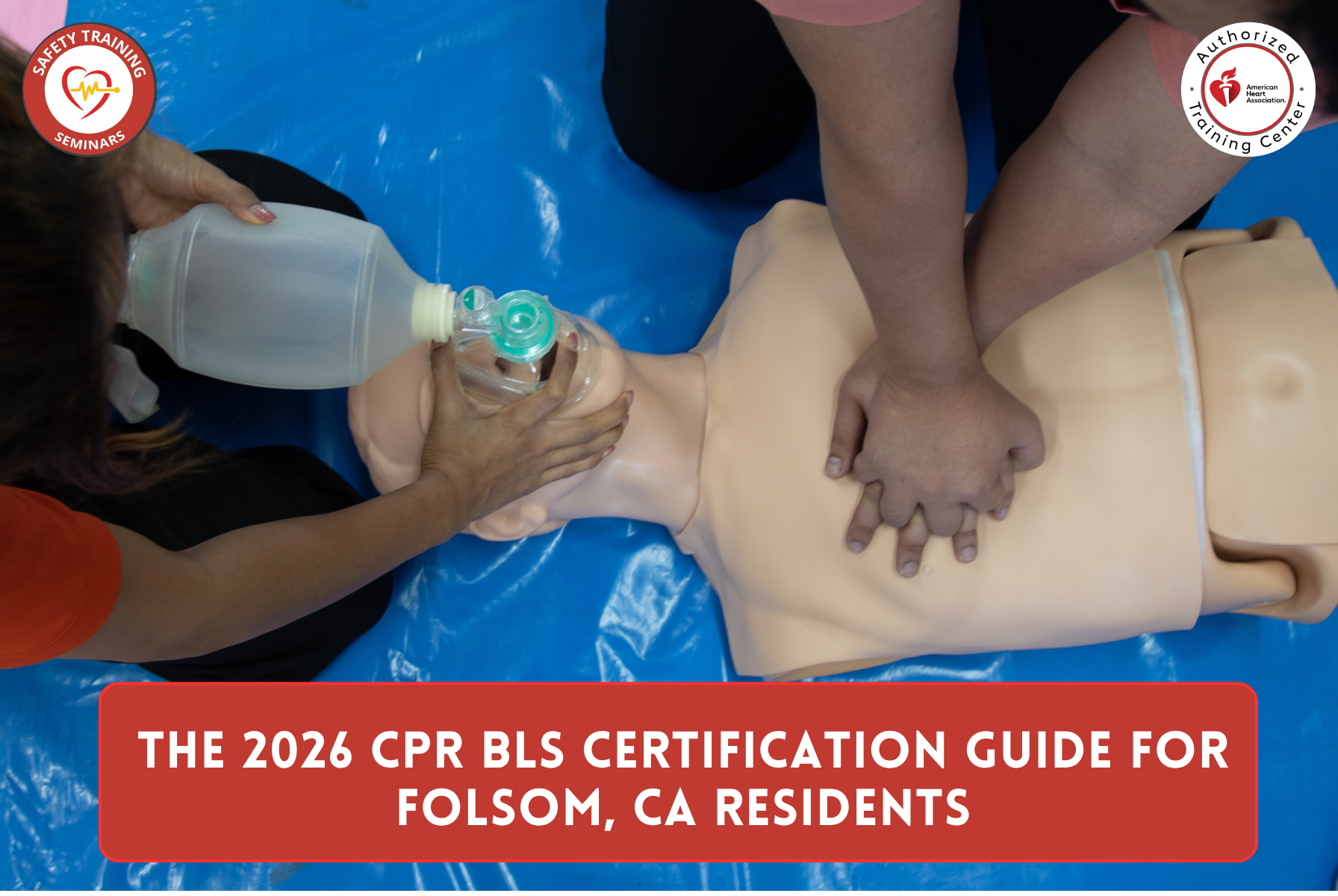
A CPR requirement may arrive with a new job offer, a clinical-placement checklist, an expiring employee record, or a school request. For Folsom, CA residents, the first decision in 2026 is not simply where to register. It is identifying the exact course and completion card the requesting organization will accept.
A BLS CPR Certification Course is generally designed for healthcare professionals, trained first responders, and students preparing for patient-care roles. Teachers, coaches, fitness staff, parents, and workplace teams may instead need CPR/AED, First Aid, or pediatric-focused training. These courses share some skills, but they are not automatically interchangeable.
The American Heart Association’s current BLS course reflects its 2025 CPR and Emergency Cardiovascular Care science. It covers recognition of life-threatening emergencies, high-quality chest compressions, appropriate breaths and ventilations, early AED use, and team-based response.
Key Takeaway: Read the written requirement before choosing a class. Confirm the course name, accepted provider, learning format, hands-on component, and deadline rather than relying on the general phrase “CPR certification.”
Begin With the Requirement You Were Given
The most reliable registration method is to work backward from the document that created the requirement. A nurse beginning a new position may see “BLS Provider” on an onboarding checklist. A clinical student may receive separate instructions about the accepted issuing organization. A preschool employee may need pediatric First Aid and CPR rather than healthcare-provider BLS.
Before enrolling, ask:
- What is the complete name of the required course?
- Must the card come from a particular organization?
- Is classroom or blended learning accepted?
- Is a hands-on evaluation required?
- Must the card remain valid through a specific date?
The American Heart Association advises learners to confirm with their employer that they are selecting the correct course. Its BLS Provider course is intended for healthcare professionals, trained first responders, and people enrolled in healthcare training programs.
Residents who already know they need local training can compare the listed CPR, BLS, ACLS, and PALS courses in Folsom with the wording of their requirement.
What BLS Training Covers in 2026
BLS means Basic Life Support. It builds practical response skills for cardiac arrest, respiratory emergencies, and choking in settings where a trained responder may need to act alone or as part of a team.
The course focuses on recognizing serious emergencies, beginning high-quality CPR, providing appropriate ventilations, and using an automated external defibrillator early. It also emphasizes team dynamics because healthcare responses often involve several people taking coordinated roles.
Students should expect hands-on practice. Depending on the delivery format, training may include:
- Adult, child, and infant CPR
- One-rescuer and team-based response
- AED operation in simulated scenarios
- Breaths and ventilations
- Choking response
- Knowledge and practical assessments
A first-time participant does not need perfect technique on arrival. Guided practice is meant to build a repeatable process and correct errors before the final skills evaluation.
How BLS Differs From Other Course Names
The course menu may list CPR, First Aid, BLS, ACLS, PALS, and NRP together. Each serves a different purpose, so choosing the most advanced-sounding title is not a useful strategy.
CPR/AED and First Aid
Community CPR/AED and First Aid courses are commonly suited to people with little or no medical training who need skills for employment, licensing, or personal preparedness. The American Heart Association’s Heartsaver First Aid options include classroom and blended learning.
Basic Life Support
BLS is designed for healthcare professionals, first responders, and healthcare students. Compared with a general community course, it places greater emphasis on high-quality CPR, ventilations, AED use, and coordinated team response.
ACLS, PALS, and NRP
ACLS is intended for healthcare professionals involved in managing cardiac arrest, stroke, and other cardiopulmonary emergencies. PALS is intended for professionals who respond to serious emergencies involving infants and children.
The Neonatal Resuscitation Program provides training related to the care and resuscitation of newborns at birth. It is intended for healthcare professionals involved in newborn care and uses online learning with hands-on simulation and debriefing. These advanced courses should be selected only when required for a particular role.
Choosing Between Classroom and Blended BLS
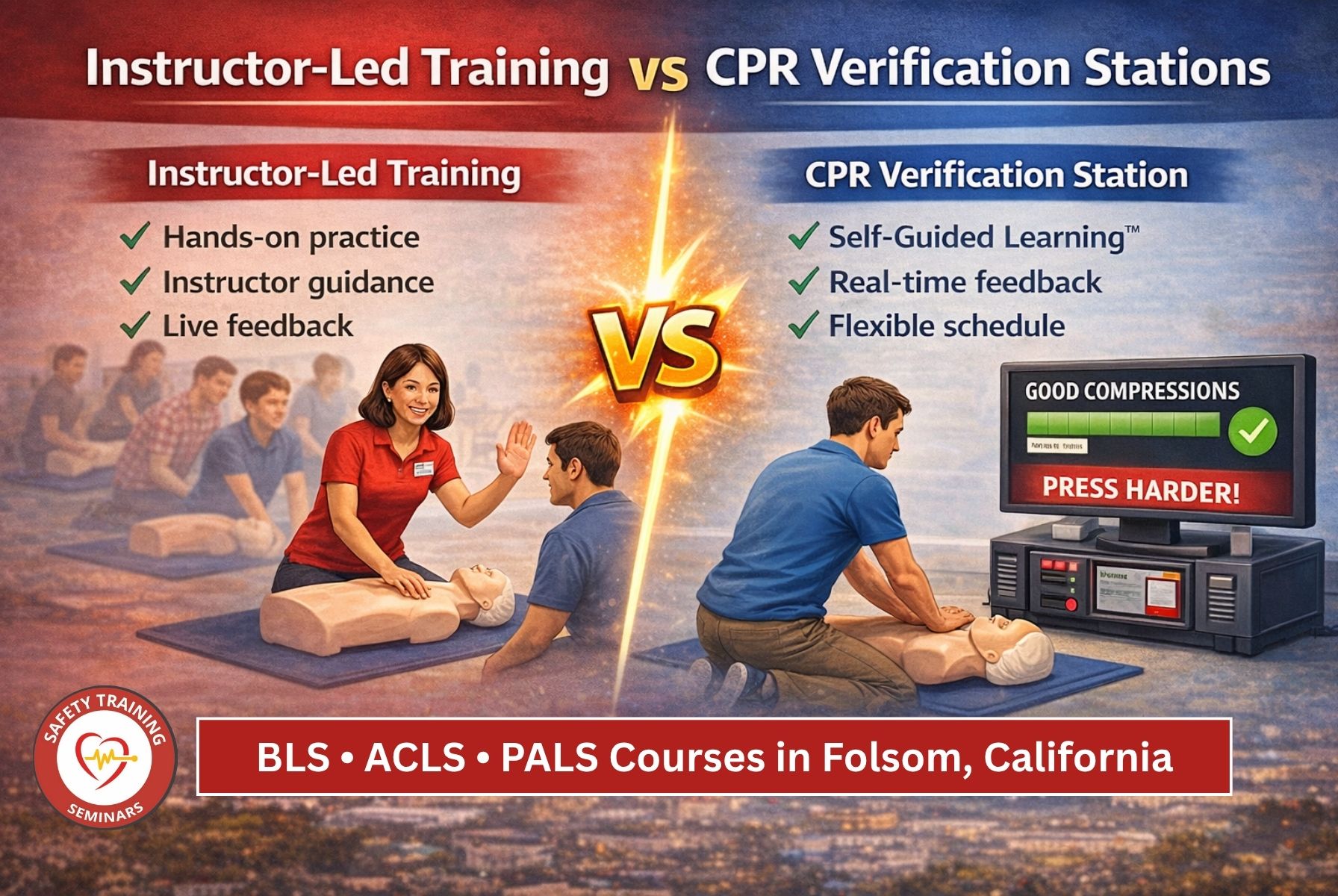
The American Heart Association lists classroom, blended, and self-guided BLS pathways. Each requires learners to demonstrate hands-on skills before receiving the associated completion eCard.
In an instructor-led classroom course, the knowledge portion, demonstrations, practice, and testing occur during the in-person experience. This format may suit first-time students who prefer immediate feedback throughout the class.
In blended learning, the student completes HeartCode BLS online and then attends a hands-on session for practice and testing. Finishing the online portion alone does not complete certification.
Self-guided learning combines online cognitive work with hands-on practice and testing at a compatible CPR Verification Station. Availability depends on the selected training location.
People whose work or school takes them north of Folsom can also review CPR and healthcare certification classes in Citrus Heights. The correct format should still be confirmed with the requesting employer or program.
What to Expect Before and During Class
Read the registration confirmation as soon as it arrives. Blended-course students may need to finish the online component and bring proof of completion before starting the skills session.
Wear clothing that allows you to kneel, bend, and practice compressions comfortably. Bring any identification, course documents, or current card requested by the training center.
During practice, pay attention to feedback about compression position, rate, recoil, ventilations, and role changes. Classroom BLS includes skills practice and testing, while blended learning adds a structured practical session after the online work.
Prior clinical experience does not remove the need to follow the current course process and demonstrate the required skills.
Safety Training Seminars in Folsom
Safety Training Seminars provides local BLS, CPR, First Aid, ACLS, and PALS course options at 13405 Folsom Blvd, Suite 507B, Folsom, CA 95630. The local website places the center near Folsom Boulevard with access from Highway 50, serving learners from Folsom and surrounding Sacramento-area communities.
A local option can help nurses, medical assistants, dental teams, healthcare students, teachers, childcare providers, fitness professionals, and workplace groups manage certification requirements. Review the course description and registration instructions carefully before purchasing.
Those who need another regional option can compare CPR and BLS classes in Sacramento. The same rule applies at any location: choose the course based on the credential requested, not merely the nearest available class.
Certification Validity and Renewal Planning
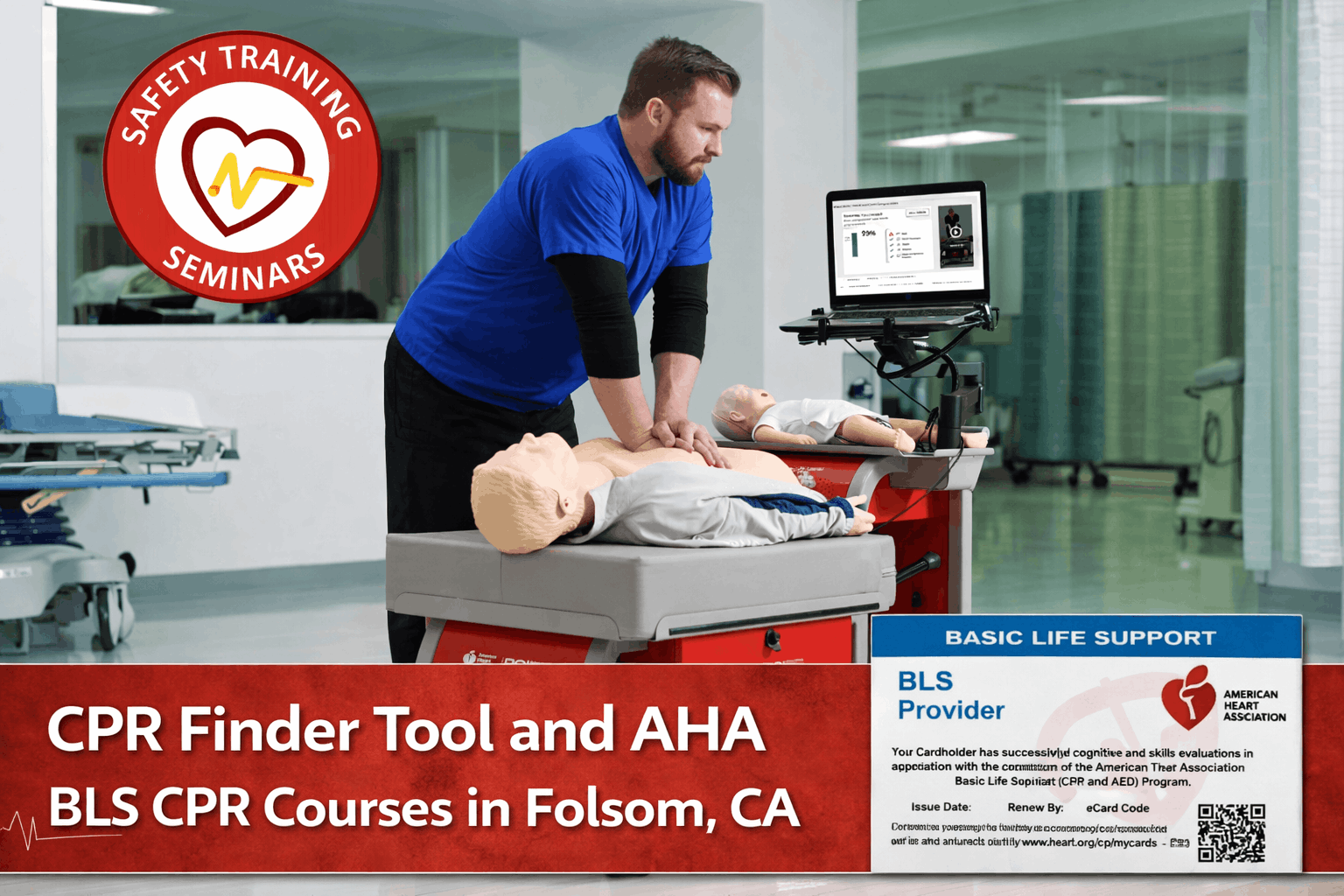
After successfully completing all BLS requirements, participants receive a BLS Provider eCard valid for two years. American Heart Association course completion cards remain valid through the end of the month in which they were issued.
Save the eCard email, download a copy, and check that the displayed name is correct. Record the expiration month in a calendar rather than depending on an employer reminder.
An employer, school, or clinical program may impose an earlier renewal deadline. A program might require the card to remain active throughout an entire placement, so check that rule before deciding when to renew.
Residents traveling toward southern Sacramento County for work or school may also consider CPR and life-support training options in Elk Grove.
Frequently Asked Questions About CPR and BLS in Folsom
Is BLS certification the same as CPR certification?
Not exactly. BLS includes CPR but is designed for healthcare professionals, first responders, and healthcare students. It also emphasizes ventilations, AED use, and team response. A general CPR/AED course may be intended for nonmedical participants.
Can I earn a BLS card entirely online in 2026?
No. The online part of HeartCode BLS is only one stage of blended learning. Students must complete the required hands-on skills session before receiving the BLS Provider eCard.
How long is an American Heart Association BLS card valid?
The BLS Provider eCard is valid for two years through the end of the issue month. An employer or school may still require earlier renewal.
Do teachers and childcare workers in Folsom need BLS?
Not necessarily. Their requirement may specify CPR/AED, First Aid, pediatric training, or another course. They should confirm the exact credential with their employer or licensing authority.
Should a first-time student choose a renewal course?
A person without a current qualifying credential should not assume a renewal option is suitable. Confirm whether an initial provider course is required.
What should I bring to a Folsom BLS class?
Follow the registration instructions. Preparation may include completing assigned online coursework, bringing proof of completion and identification, and wearing clothing suitable for manikin practice.
Make the Course Requirement Your Starting Point
Folsom residents have several CPR and healthcare-training options, but the correct selection depends on the credential requested by an employer, school, licensing body, or clinical program. BLS is usually appropriate for healthcare professionals, first responders, and students entering patient-care environments; other learners may need CPR/AED, First Aid, or pediatric training.
Before enrolling, confirm the complete course name, accepted provider, class format, hands-on requirement, and renewal deadline. Safety Training Seminars offers local training through its Folsom center. Review the Folsom course-location page and register for the option that matches the written requirement.